What’s the Latest News for GLP-1 Medications?
“As demands surge for GLP-1 weight loss meds, it’s a challenge to keep up with who’s getting in on the action.”
Since obesity is now widely recognized as an epidemic in the United States, the internet today is filled with articles about the latest pharmaceutical agents like GLP-1 drugs that are being prescribed to reduce hunger and improve a patient’s utilization of its primary fuel sources (fats and carbohydrates). But, the rise in use of receptor agonists for chronic weight management did not happen overnight. Quite the opposite, the first glucagon-like peptide-1 where weight loss was observed as a side effect was exenatide in the mid-to-late 1990s.
Exenatide was a synthetic version of a hormone found in the venom of Gila monsters in the 1980s that was being studied for stimulating insulin release and lowering blood sugar levels in patients with Type 2 diabetes. A patented version was FDA-approved as an incretin mimetic in 2005, but solely for treating diabetes and not as a weight-loss drug. Exenatide was globally discontinued in 2024 as a twice-daily GLP-1 injectable due to newer weekly formulations with better dosing convenience and documented clinical results for weight-loss benefits.
In 2014, Novo Nordisk’s developed longer-acting liraglutide that became the first GLP-1 medication FDA approved for weight control, but at a higher dosage. Three years later, the blockbuster drug semaglutide was approved as a once-weekly injection with superior weight reduction in diabetic patients. Likely the biggest breakthrough came with FDA approval of a dual-action of Eli Lilly’s GLP-1/GIP receptor agonist (tirzepatide) for adults with a minimum BMI of 30, as well as overweight patients with a BMI of 27 and at least one weight-related disorder.
Do GLP-1 RAs have broader health indications?
Yes, even with all the press about next-generation prescriptive weight loss drugs, the blockbuster drug semaglutide continues to receive expanded FDA approval for reducing the risk of major metabolic and chronic health conditions. Semaglutide has also been approved for treating adverse cardiovascular events and chronic kidney disease, plus ongoing research is actively investigating GLP-1’s potential to treat sleep apnea, liver disease, and addiction to alcohol or drugs. Moreover, the next generation of dual and triple-action incretin mimetics, as well as non-peptide pills are currently in advanced stages of clinical development.
Why are compounded GLP-1s not FDA-approved?
Simply put, compounded versions of brand-name and generic medications are mixed by approved compounding pharmacies that do not undergo the same rigorous testing and standardization processes required for commercially-produced pharmaceuticals. Whereas federal regulators are allowed to authorize the compounding of alternatives during drug production shortages, the FDA has increasingly scrutinized the legality of producing semaglutide or tirzepatide as shortages have eased, plus compounding ingredients like semaglutide salts have not been clinically tested for safety or efficacy.
Will GLP-1 oral pills replace once-weekly injections?
Although there’s has been lots of excitement surrounding the approval of a GLP-1 for oral consumption as a daily tablet, the official Wegovy pill has been approved by the FDA for chronic weight management and was recently launched nationwide in four dosage strengths. In addition, a non-peptide small-molecule oral GLP-1 receptor agonist called orforglipron has a unique structure that allows it to survive digestion without fasting or food restrictions. This could eliminate the need for injections with patients who are adverse to needles. But, GLP-1 pills are unlikely to completely replace weekly injections due to lower bioavailability.
Is there a triple-action class of GLP-1 weight medications?
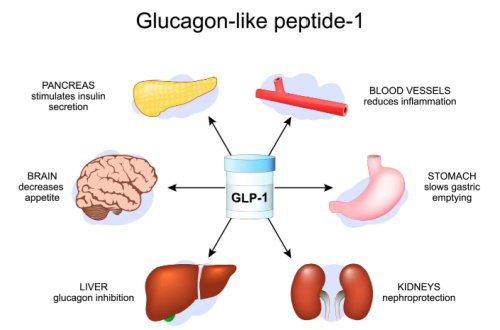
Currently, the best known Triple-G is an advanced investigational drug retatrutide that is developed by Eli Lilly. Retatrutide stimulates three different gut hormone receptors, including glucagon-like peptide-1 (GLP-1), glucose-dependent insulinotropic-polypeptide (GIP), and glucagon. GLP-1 slows digestion, increases fullness, and signals the brain to reduce appetite. GIP is a polypeptide that triggers insulin release when blood sugar levels are high. Glucagon has been added to increase basal metabolic rate and burn stored fat for energy. Phase 3 trials showed significant results with retatrutide increasing energy expenditure.
How Does Gut-Brain Signaling Silence “Food Noise”?
“Food Noise” is the scientific term that researchers use that refers to those persistent, and often intrusive, thoughts about food that trigger cravings for less healthy food options and regardless of whether you are physically hungry or not. Although often deemed a lack of willpower, it is actually a biological phenomenon driven by hormonal miscommunication between your gut and the brain’s reward centers. Silencing this annoying chatter involves addressing hormonal dysfunction in signaling for both biological and psychological pathways.
Neuroimaging using MRIs have shown that men or women who suffer from food cravings can view images of high-calorie comfort foods and light up the areas of their brain associated with noise, reward and motivation. But, taking GLP-1 weight loss medications can help to reduce annoying cravings and obsessive thoughts about food. Moreover, insulin resistance, glucose fluctuations, and elevated stress hormones (cortisol) can also trigger interest in quick sources of energy like ultra-processed foods.
Adults who are prescribed GLP-1 medications for weight management may actually have a window during which food noise is quieted and motivation for change is abnormally high. The vast majority of people who are buying prescriptive GLP-1 weight loss drugs also understand they may need to adopt better lifestyle behaviors, and while in this window, their intentions no longer have to compete with obsessive thoughts once intrusive food chatter is silenced. Plus, by modulating dopamine pathways, GLP-1s can lessen obsessive urges.
________________________
Although the earliest clinical trials involving glucagon-like peptide-1 receptor agonists date back to the 1980s, the next-generation of weight loss drugs on the horizon have shown significant promise with weight loss as high as 30% of one’s existing body weight. Moreover, the experimental triple-action retatrutide appears to be effectively targeting three unique receptors related to improved metabolic efficiency. At Metabolic Research Center Grand Junction, our goal is to provide the GLP-1 support needed to create a customized program that preserves crucial muscle mass, limits the common side effects of using a GLP-1 receptor agonist, and produces the changes your body needs for sustainable weight control.
By submitting this form, you agree to receive marketing text messages from us at the number provided, including messages sent by autodialer. Consent is not a condition of any purchase. Message and data rates may apply. Message frequency varies. Reply HELP for help or STOP to cancel. View our Privacy Policy and Terms of Service.